The Dinobots Origin Story
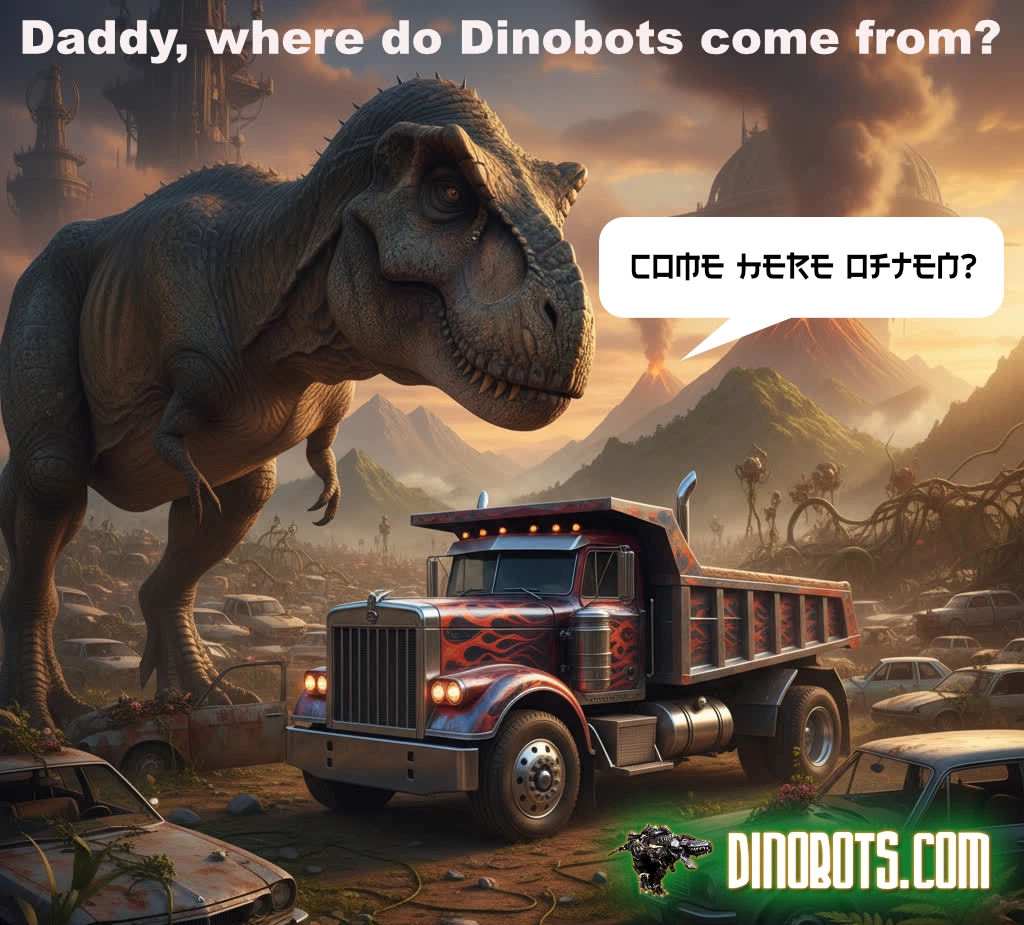
How were the Dinobots conceived? Well kids, when your dinosaur daddy took and your mechanical mommy are alone together… While many of you were likely thinking it was simply a few million years of natural selection doing it’s thing, the Dinobots in fact came to be in a rather haphazard albeit still quite natural way. Because what’s more natural that a marriage of dinosaurs and robots? (gratis sardonic rhetorical question – no extra charge.)
While the Dinobots first appeared in The Transformers animated TV series in 1984, specifically in the two-part episode “S.O.S. Dinobots” (Season 1, Episodes 8–9 in broadcast order). In that story, the Autobots—specifically Wheeljack and Ratchet—create the Dinobots on Earth after discovering dinosaur fossils in a tar pit. So within the fictional universe, the credit for their creation goes to those two well-meaning mechanical mad geniuses who thought, You know what we need in this delicate civil war? Robot dinosaurs.
But in the meat world, the Dinobots were conceived through a evolving collaboration between Hasbro (the American toy distributor), Takara (the Japanese toy manufacturer who originally produced the Diaclone line), and Sunbow Productions (the animation studio responsible for the TV show’s development and storylines).
Stage 1: The toys themselves came from Takara’s Diaclone “Dinosaur Robo” line, first released in Japan in 1983—before Transformers even existed as a brand. These toys featured small pilot figurines who sat inside the dinosaurs, because in Diaclone continuity, they weren’t sentient robots but mecha piloted by humans. When Hasbro licensed Takara’s toy molds to create Transformers in 1984, they absorbed the Dinosaur Robo figures and renamed them Grimlock, Slag, and Sludge, later joined by Snarl and Swoop.
Stage 2: The concept of Dinobots, robotic dinosaurs, as a team—sentient, occasionally insubordinate Autobots who transform into robotic dinosaurs—was developed by Bob Budiansky, the Marvel Comics writer and editor who gave many early Transformers their names, personalities, and backstories. Budiansky’s character bios shaped how the Dinobots behaved: proud, stubborn, and not especially good at teamwork.
The cartoon portrayal was then fleshed out by Ron Friedman, a key writer for the original Transformers TV series, and by the Sunbow story editors who took Budiansky’s basic personalities and cranked the chaos dial to eleven—making Grimlock the swaggering, monosyllabic brute fans came to love.
So, depending on which layer you’re talking about:
- In-universe creators: Wheeljack and Ratchet.
- Toy design origin: Takara’s Diaclone Dinosaur Robo line (1983).
- Naming and characterization: Bob Budiansky (Marvel Comics, 1984).
- TV narrative adaptation: Ron Friedman and the Sunbow Productions writing team (1984).
Their official debut as the Dinobots came in the fall of 1984—turning what was supposed to be a one-off “science experiment gone wrong” into one of the most iconic, chaotic sub-factions in Transformers history.
A Twinkle In Your Father’s Eye: Takara Toys’ Dinosaur Robos
The Dinosaur Robo figures were designed by Takara’s Koujin Oono and other members of the original Diaclone team. Their design brilliance came from one question: what do boys love as much as robots? The answer was, then at least if not still today: Dinosaurs, of course. The figures were built to look both futuristic and skeletal — lots of visible rivets, plated armor, moving jaws, and molded dino-sinews.
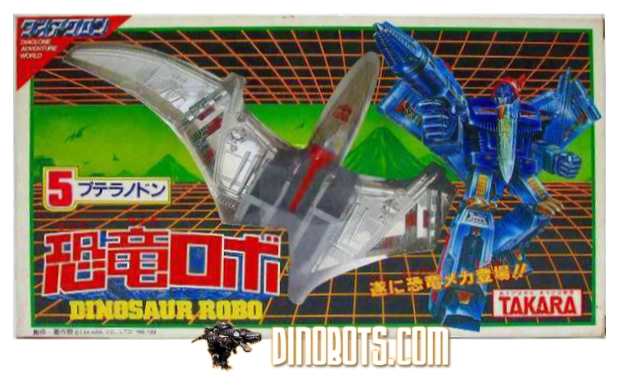
They weren’t especially screen-accurate to real dinosaurs (Grimlock still walked like Godzilla after a hip replacement), but they had a deliberate industrial texture. These weren’t living creatures — they were machines pretending to be monsters. The clear cockpits added a kind of eerie verisimilitude: it was easy to imagine some poor pilot sweating behind the controls as his metal T. rex barreled through a mountain.
Unlike the later Transformers, the Dinosaur Robo toys had no personalities or faction allegiances — they were hardware, piloted by human heroes, not characters themselves. The boxes showed art of pilots maneuvering them in combat, complete with background dioramas of destruction and alien landscapes. The line was sold domestically in Japan only, and while it wasn’t Takara’s top seller, it did well enough to become a recognizable sub-brand of Diaclone by 1983.
Dinobots Grow
The transformation of Takara’s Dino Robo figures into the Dinobots in the United States is a fascinating case of cultural and commercial adaptation. In Japan, the Dinosaur Robos were part of Takara’s Diaclone line, which consisted of human-piloted robot toys. The dinosaur robots were not sentient; they were essentially “vehicles” for tiny pilot figures that sat inside translucent cockpits. Each figure had a distinct dinosaur identity—Tyrannosaurus, Triceratops, Brontosaurus, Stegosaurus, and Pteranodon—but they had no personalities or allegiances beyond the implied commands of their human operators. The toys were designed with chrome plating, articulated limbs, and mechanical detailing that made them feel futuristic, yet still grounded in the conceit of a child controlling a miniature war machine.
When Hasbro acquired the molds in 1984 to expand the newly minted Transformers brand, they recontextualized these machines for an American audience. The most radical shift was from piloted machines to sentient beings: the robots were now fully autonomous Autobots capable of speech, emotion, and moral judgment. Bob Budiansky, the Marvel Comics writer and editor who contributed heavily to early Transformers lore, provided names, character traits, and backstories that shaped each Dinobot’s personality—Grimlock the monosyllabic leader, Slag the hot-headed Triceratops, and so on. The television series produced by Sunbow Productions and Marvel further amplified these traits, portraying the Dinobots as chaotic, prideful, and occasionally insubordinate, creating tension and humor within the Autobot team. What had been static, pilot-controlled toys in Japan became larger-than-life characters in the United States, blending the mechanical spectacle of the original designs with narrative depth and personality, thus cementing the Dinobots as one of the most iconic subgroups in Transformers lore.